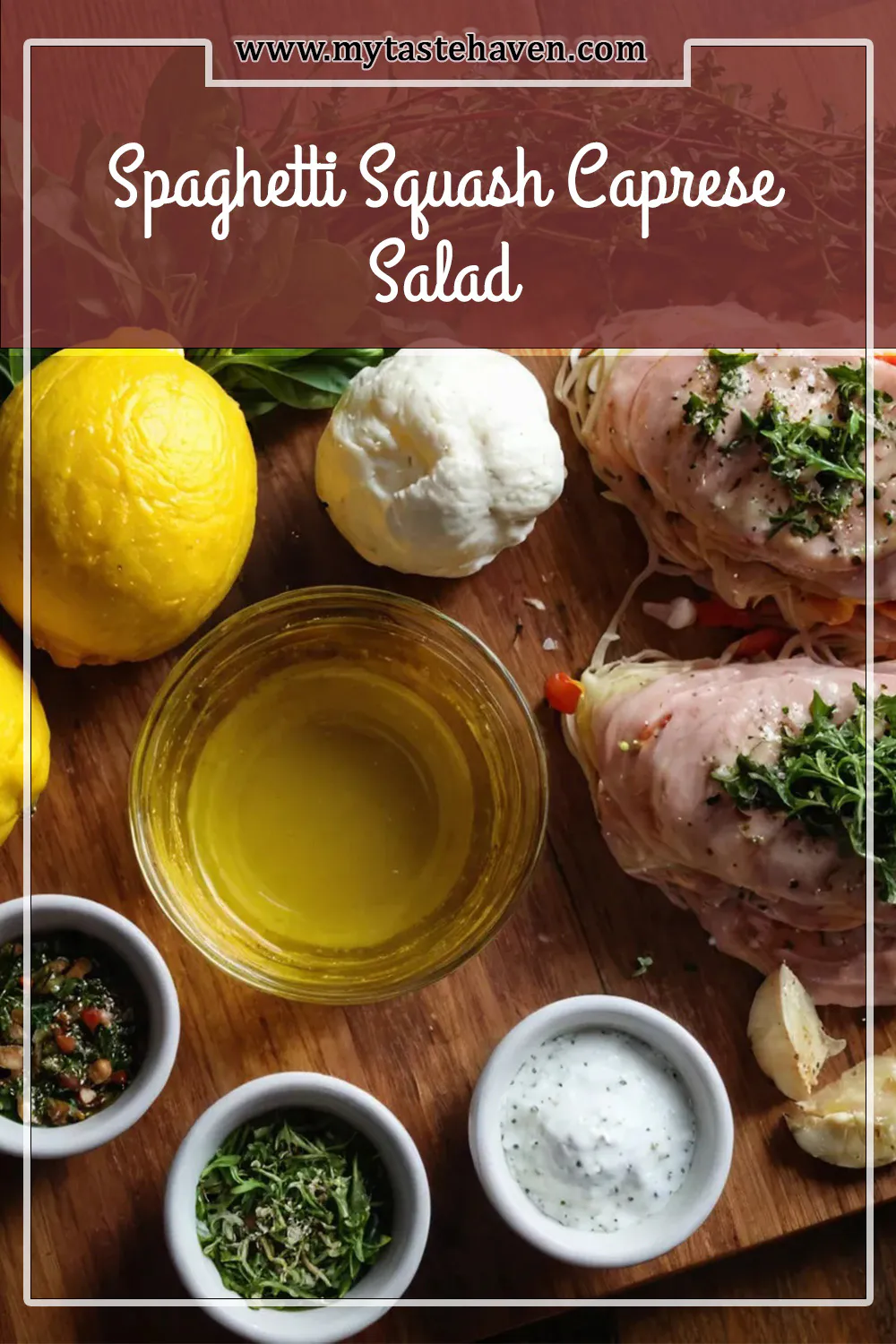
Spaghetti Squash Caprese Salad
Print
Spaghetti Squash Caprese Salad
A fresh, vibrant salad made with roasted spaghetti squash, ripe tomatoes, creamy mozzarella, and aromatic basil.
- Total Time: 55
- Yield: 4 1x
Ingredients
✓ 1 medium spaghetti squash
✓ 1 cup Roma tomatoes, diced
✓ 8 oz fresh mozzarella, cubed
✓ 1 tablespoon extra-virgin olive oil
✓ 1 tablespoon balsamic glaze
✓ ½ cup fresh basil, chopped
✓ Salt and pepper to taste
Instructions
✓ Preheat oven to 400°F
✓ Cut squash in half lengthwise and scoop out seeds
✓ Drizzle halves with olive oil and season with salt and pepper
✓ Roast for 35-40 minutes until tender
✓ Cool slightly and fluff squash with a fork
✓ Dice tomatoes and toss with a pinch of salt
✓ In a large bowl, combine squash, tomatoes, and mozzarella
✓ Drizzle with olive oil and balsamic glaze
✓ Toss gently and season with salt and pepper
✓ Stir in fresh basil just before serving
Notes
For best results, use room temperature mozzarella and add basil just before serving.
Nutrition
- Calories: 350
- Sugar: 8
- Sodium: 400
- Fat: 12
- Carbohydrates: 45
- Fiber: 5
- Protein: 15
What if the most satisfying, fresh, and versatile salad you’ve ever tasted came from a humble winter squash? Spaghetti squash Caprese salad transforms an underused vegetable into a vibrant, protein-packed dish that’s as elegant as it is simple.
This recipe combines the creamy, melty texture of fresh mozzarella with the bright, acidic bite of Roma tomatoes and aromatic basil. The key is using the squash’s tender strands as the base—no pasta required. You’ll find yourself reaching for this dish again and again, especially during summer months when fresh produce is at its peak.
How to Roast Spaghetti Squash
Roasting spaghetti squash is the secret to unlocking its full flavor and texture. Choose a medium-sized squash with a firm, yellow rind and no soft spots. Cut it in half lengthwise, then scoop out the seeds and stringy pulp. Drizzle each half with 1 tablespoon of extra-virgin olive oil and season lightly with salt and pepper.
Roast in a preheated 400°F oven for 35-40 minutes, or until the flesh easily separates into spaghetti-like strands. The squash should be tender when pierced with a fork. Let it cool slightly before fluffing with a fork—this step is crucial for achieving that perfect, light texture.
The Best Tomato Selection for Caprese
Roma tomatoes are ideal for this salad because of their meaty texture and low moisture content. They hold their shape well when diced and don’t release excess liquid that could make the dish soggy. For the best results, use ripe, red tomatoes that are firm but yield slightly to the touch.
Dice them into ¼-inch cubes and toss gently with a pinch of salt. This helps draw out any excess moisture and enhances the natural sweetness. If you’re using a mix of heirloom or cherry tomatoes, reduce the amount to 1 cup total to maintain the right balance.
The Perfect Mozzarella Cube
Fresh mozzarella is essential here. Use 8 oz of it, cut into ½-inch cubes. Avoid pre-shredded or low-moisture varieties—they won’t melt properly or provide the creamy, rich mouthfeel this dish needs.
Let the mozzarella come to room temperature before adding it to the salad. This ensures it absorbs the flavors of the olive oil and balsamic glaze better. A quick dip in warm water (10 seconds) can help soften the cheese slightly, giving it a more luxurious texture when mixed in.
Fresh Basil: The Flavor Anchor
Fresh basil adds the final note of brightness that makes this salad memorable. Chop ½ cup of basil leaves finely, but don’t over-process them. You want the aroma to remain intact and the texture to be soft and fragrant.
Add the basil at the last moment, just before serving. This preserves its vibrant green color and prevents it from wilting. If you’re short on time, use 2 tablespoons of dried basil, but be aware that it won’t deliver the same fresh, herbaceous taste.
Assembly Tips for a Restaurant-Quality Dish
The key to a great Caprese-style salad lies in layering and balance. Start by placing the roasted spaghetti squash strands in a large bowl. Then add the diced tomatoes and cubed mozzarella.
Drizzle with 1 tablespoon of extra-virgin olive oil and 1 tablespoon of balsamic glaze. Toss everything gently to coat without breaking apart the ingredients. Season with salt and pepper to taste. Finally, sprinkle the chopped basil on top and serve immediately.
For a more rustic presentation, transfer the salad to a shallow bowl or platter. Garnish with a few extra basil leaves and a drizzle of olive oil for visual appeal.
Common Mistakes and How to Avoid Them
Too watery? You probably didn’t press out enough moisture from the tomatoes or squash. Always test your squash for tenderness and allow it to cool slightly before fluffing.
Over-salting? Add salt gradually, and taste the dish before serving. The mozzarella already contributes salt, so avoid adding too much.
Too bland? Make sure you’re using high-quality olive oil and balsamic glaze. These are the foundation of flavor in the dish.
Make-Ahead and Storage Instructions
You can prepare the roasted spaghetti squash up to 2 days ahead and store it in the refrigerator, covered tightly. Keep the tomatoes and mozzarella separate, and assemble the salad just before serving.
If you want to prep the entire dish ahead, do so in the fridge, but don’t add the basil until right before serving. The herb wilts quickly and loses its vibrancy when stored longer.
Substitutions and Variations
If you don’t have fresh mozzarella, use a high-quality block of fresh cheese or a mild goat cheese for a tangy twist. For a vegan version, substitute with tofu or cashew-based cheese.
Swap Roma tomatoes for cherry or heirloom varieties for more color and flavor variation. You can also add a pinch of red pepper flakes or a dash of oregano for extra depth.
Nutrition and Serving Suggestions
This salad serves 4 and is perfect as a light lunch or side dish. It’s packed with antioxidants from the tomatoes, healthy fats from olive oil, and protein from the cheese. Each serving contains approximately 350 calories, with 15g of protein, 45g of carbohydrates, and 12g of fat.
Serve alongside grilled chicken or fish for a complete meal, or enjoy it on its own as a refreshing starter. The dish pairs beautifully with crusty bread or a light vinaigrette.